
KSASF 2025:
Reconstructing a Black Hole
A science competition for around ninety international students that I led as team leader and MC. Teams reconstruct an invisible “black hole” from diffraction patterns, on a web platform our team built, modeled on how the Event Horizon Telescope actually made the first real image of one.
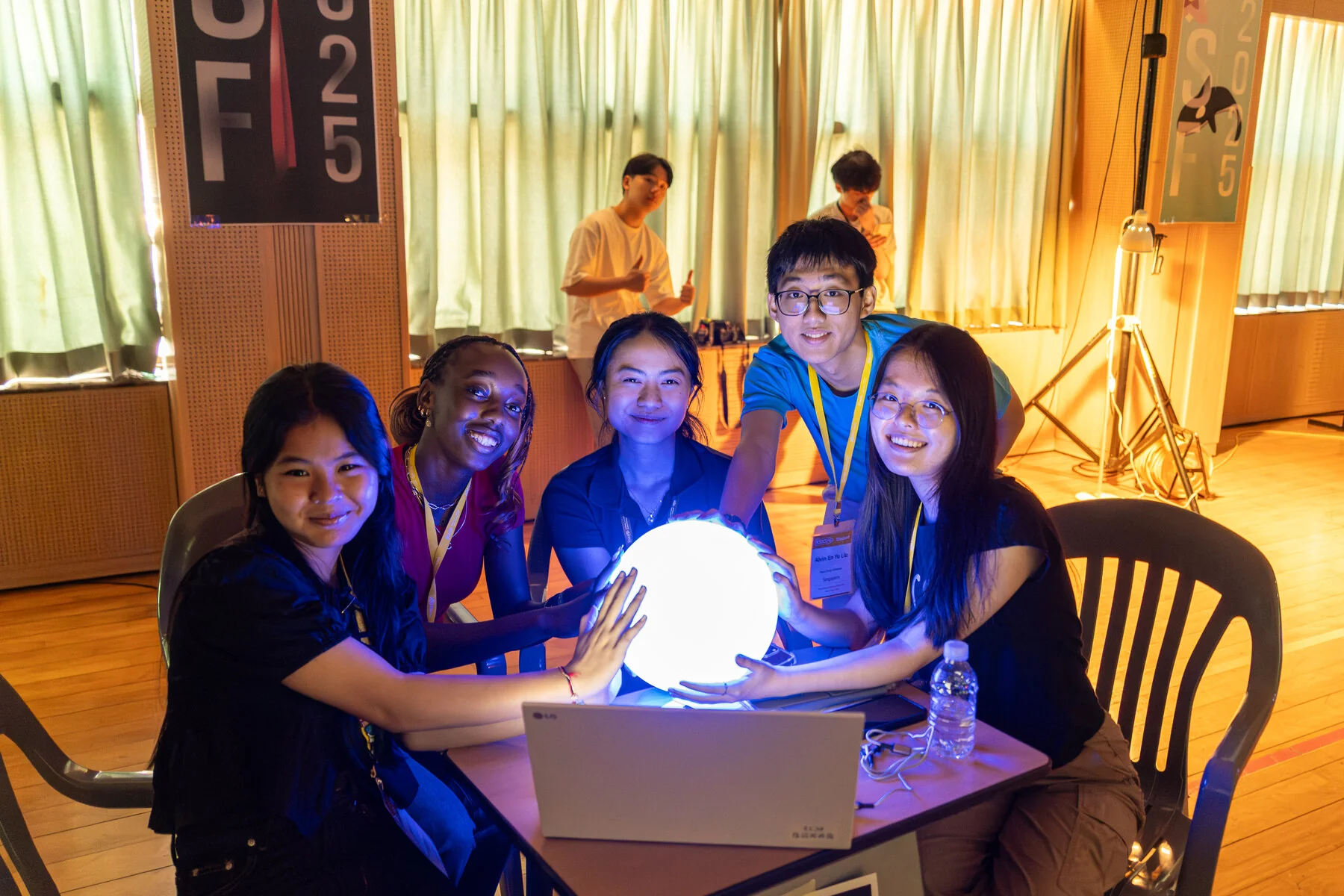
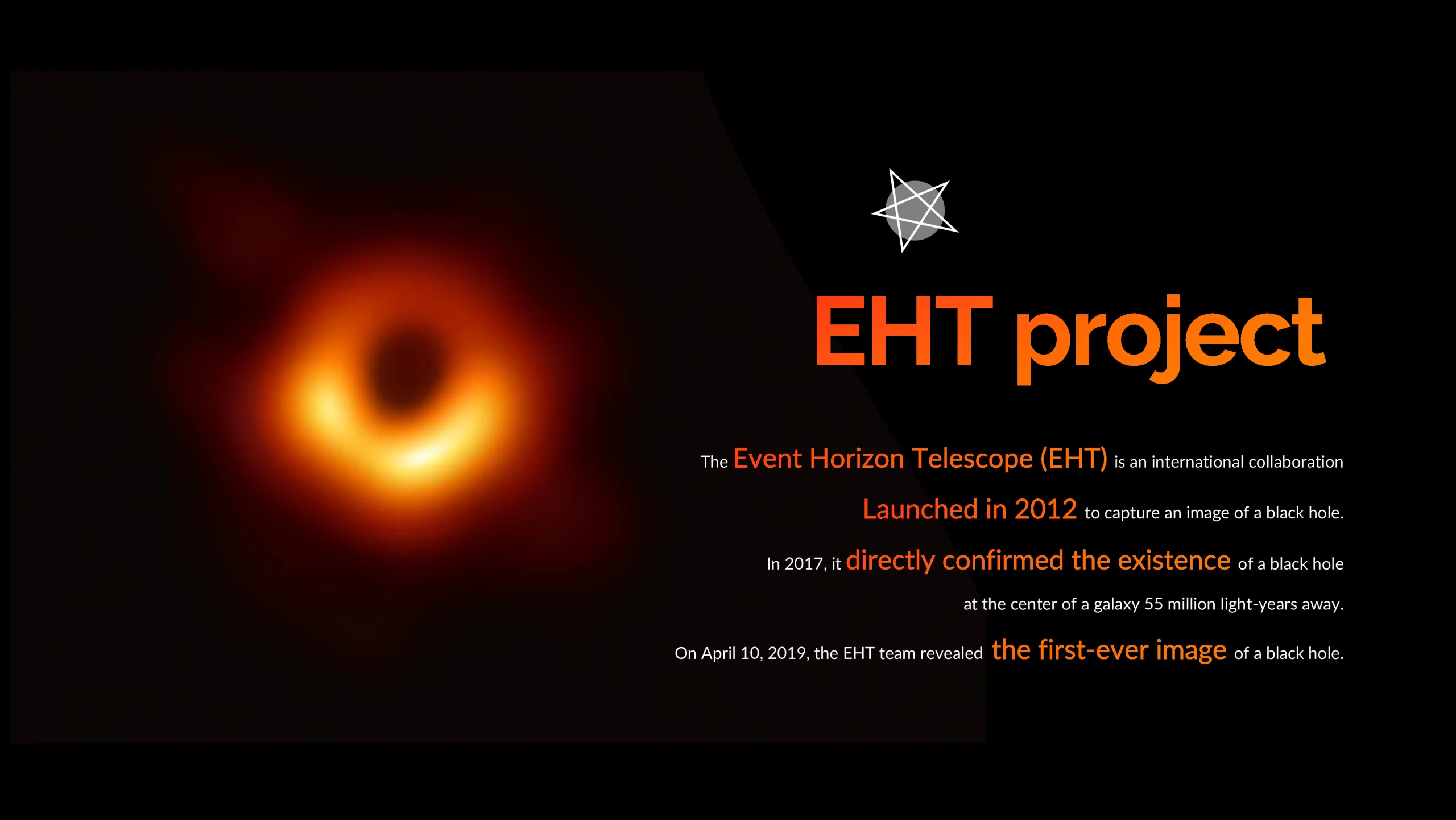
In 2019, the Event Horizon Telescope made the first image of a black hole, not with one giant telescope but by combining sparse data from eight of them around the world and reconstructing the picture that best fit. One goal, one global team. That framing was the whole point for me: I wanted a competition that felt like that, where an international cohort had to collaborate to reveal something none of them could see alone.
So our team designed an activity that mirrors the physics. A hidden shape, the “black hole”, is encoded as a diffraction pattern; teams collect fragments of that pattern, then run it backwards to reconstruct the original. I led the team that built and ran it, and was MC on the day for about ninety students across eighteen teams.
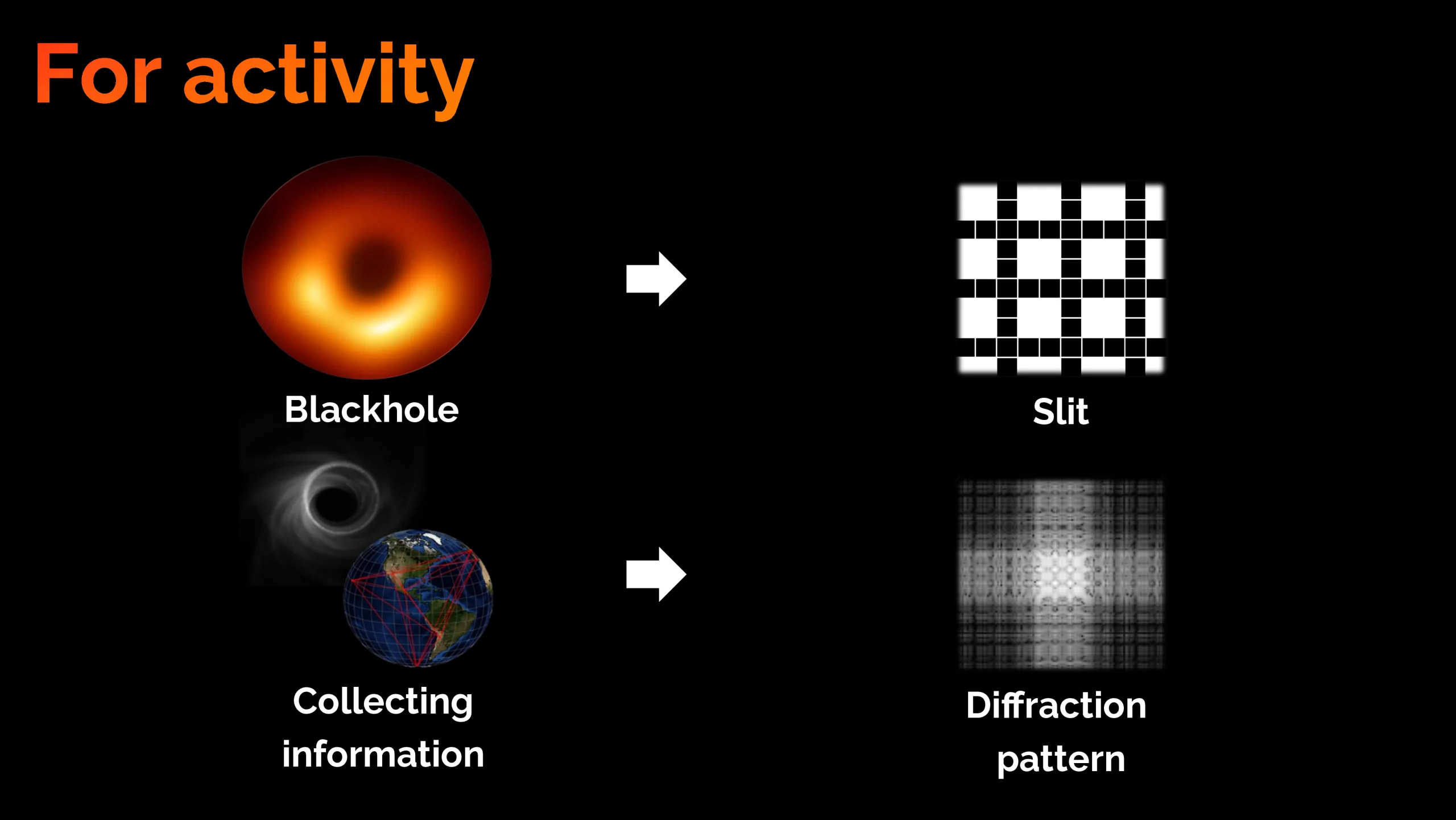
The analogy is exact enough to teach something. A slit has a shape; shine light through it and you get a diffraction pattern, the Fourier transform of the slit. The EHT does the same thing in reverse: it measures a sparse, transformed signal and infers the source. Any single measurement is consistent with infinitely many images, so you rank the possibilities by how plausibly they explain the data.
In the competition, the “black hole” is a slit, the collected data is its diffraction pattern spread across the floor, and winning means running the transform backwards accurately, then forward again to check your answer reproduces what you measured.
Teams photograph fragments of a diffraction pattern laid out across the hall floor, each assigned its own region, and upload them to the platform.
They assemble the fragments on a canvas, run the reverse transform to recover the hidden slit shape, then forward-convert it to check the result reproduces their data.
Each team reads off the reconstructed shape and submits a final answer with a written, defensible explanation of how they got there.
Teams vote to elevate the most convincing reconstruction, the moment that mirrors how the real EHT collaboration converged on a single agreed image.
All four phases run on a web platform our team built: photo upload, an assembly canvas with brightness and contrast controls, the reconstruction and forward-conversion tools, answer submission, and the voting round. It had to hold up live, on unfamiliar devices, for students arriving from many countries at once, so clarity and reliability came before polish.
My own contribution on the code side was the front-end: the landing page that framed the whole thing around the Event Horizon Telescope, and the login that around ninety international students passed through first. As the entry point, it had to set the tone and simply work.

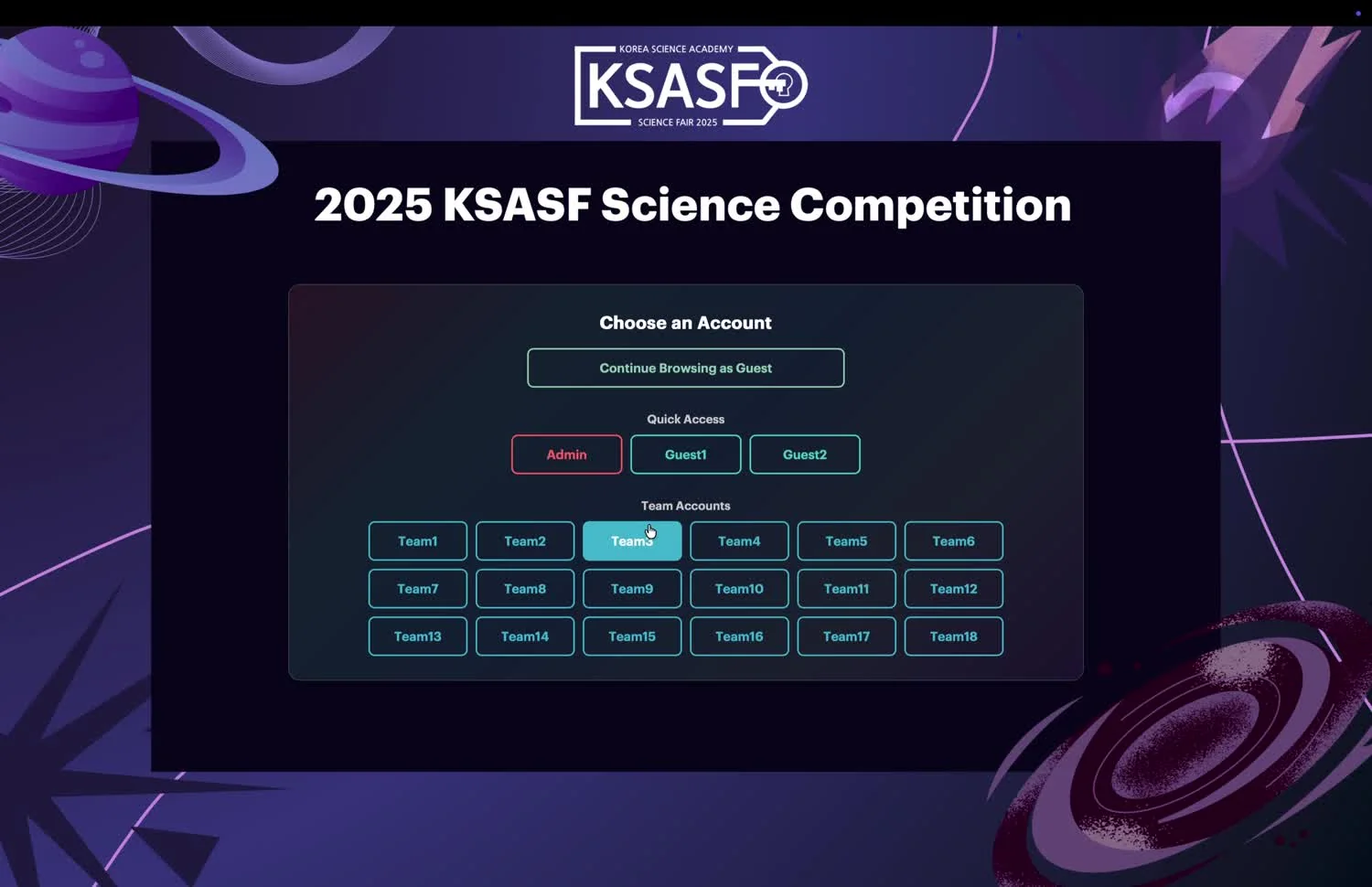
From there the physics takes over. Teams assemble their diffraction fragments on a shared canvas, then run the reverse transform to recover the hidden slit and forward-convert it to check that the answer reproduces their own data.
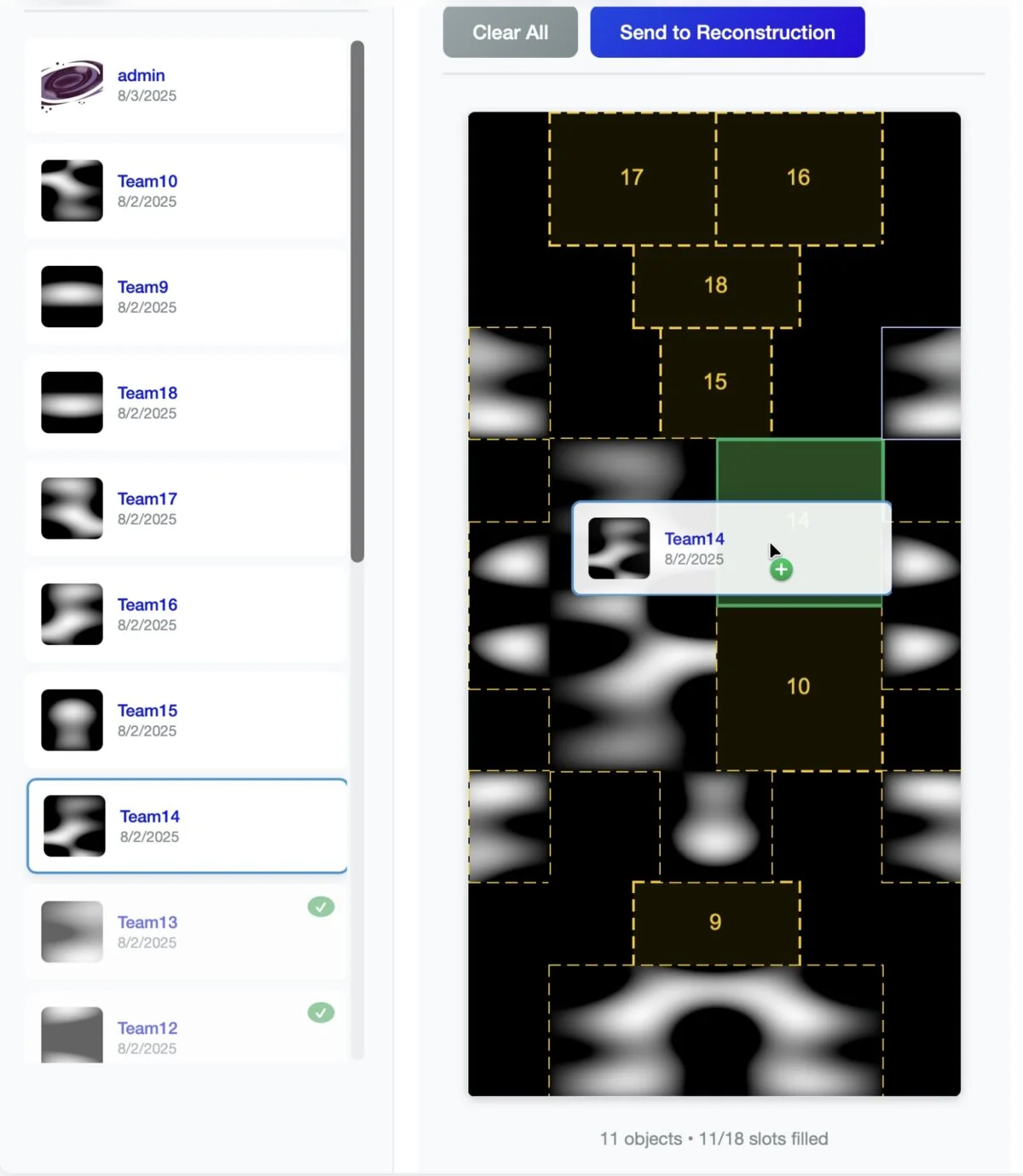
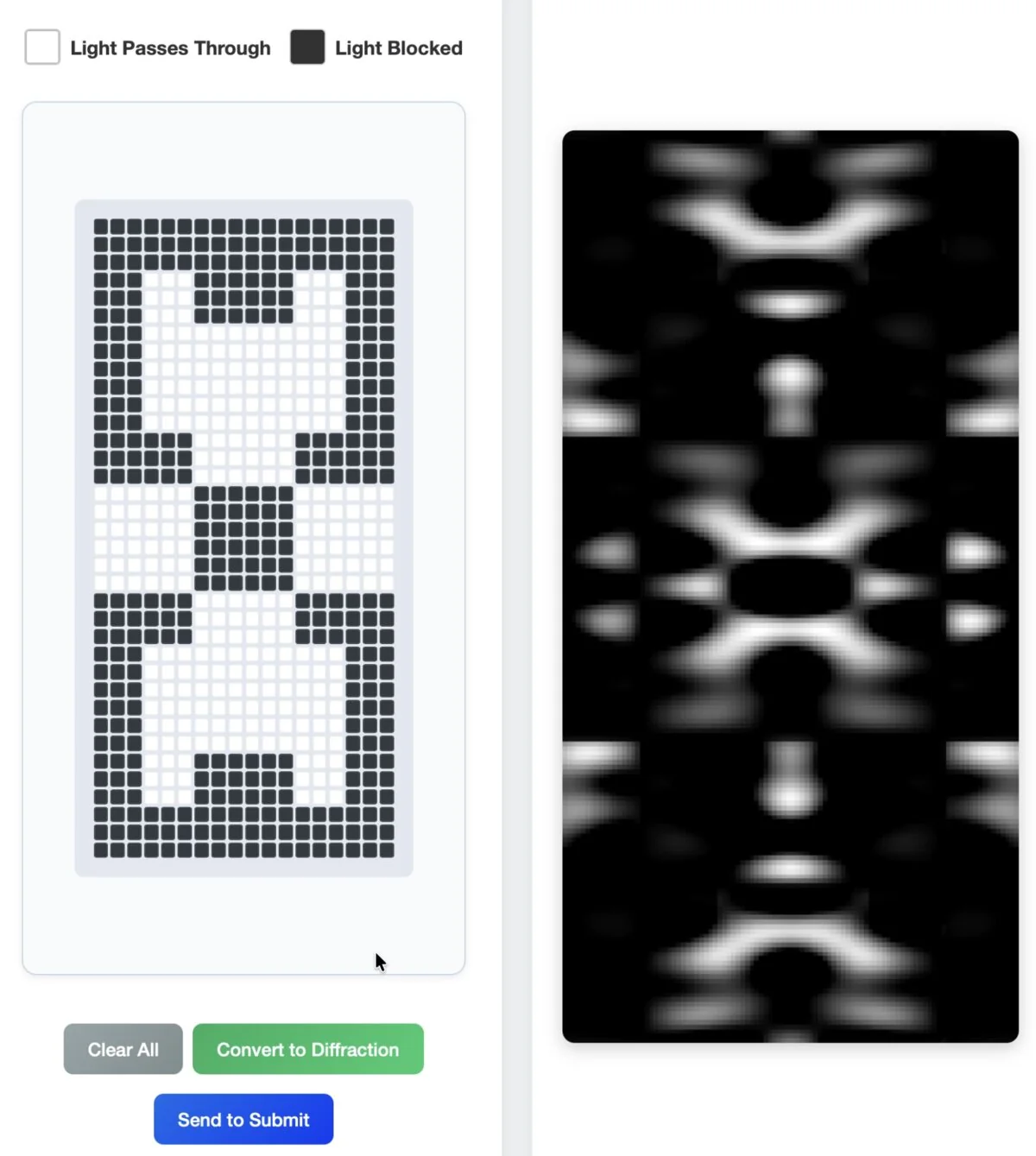
After the competition, I reworked the front-end and back-end so anyone can log in and go through it from a team's perspective. That adapted build is the site you can visit now.
Beyond the design, the job was people: running daily prep, mediating between supervisors and members, handling rehearsals and logistics, and hosting the event itself. I'd pushed to build the whole thing around collaboration rather than pure competition, partly because of a conversation at ISEF, where a student from another country wanted to borrow our method rather than beat us, and it changed what I thought research was for.
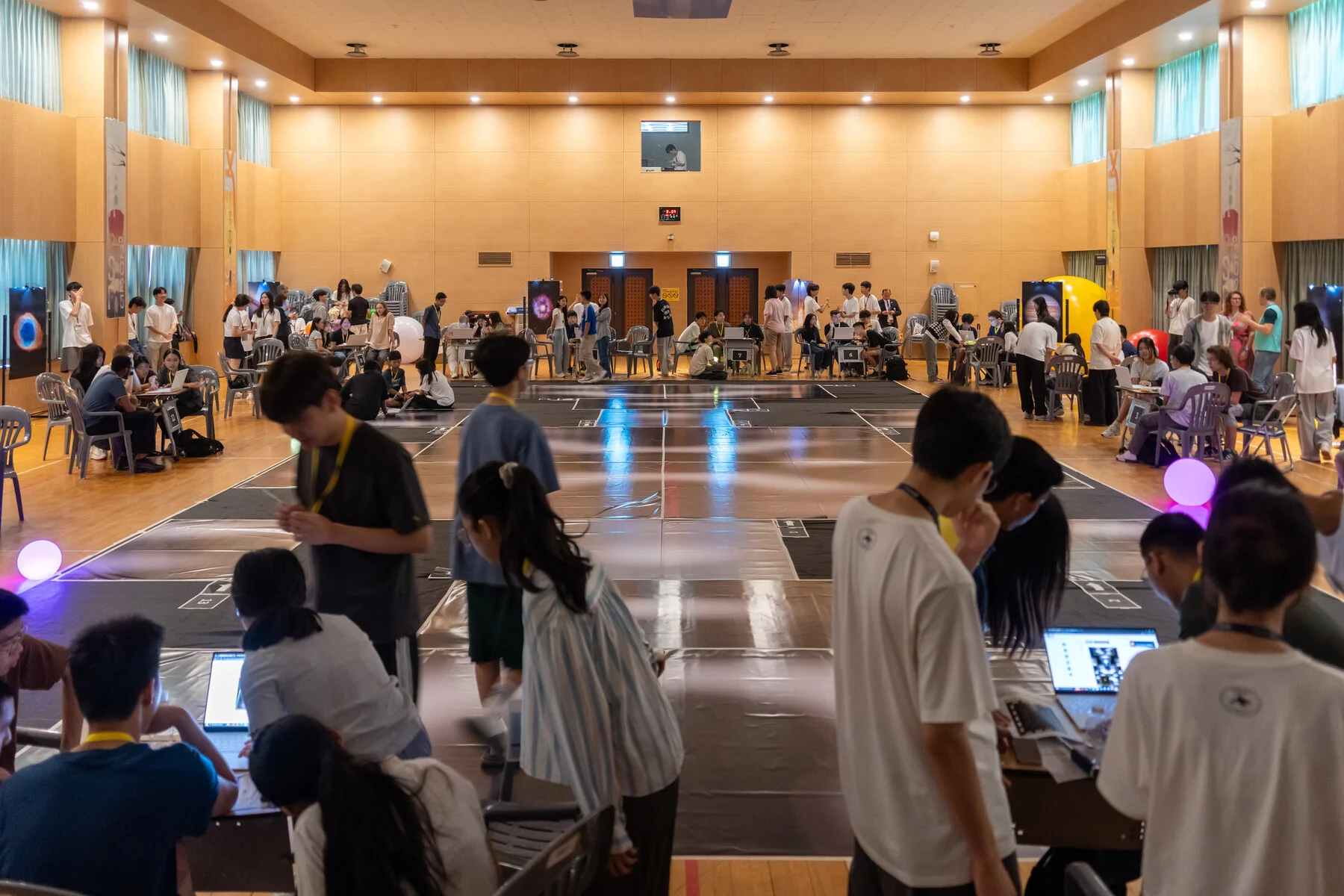
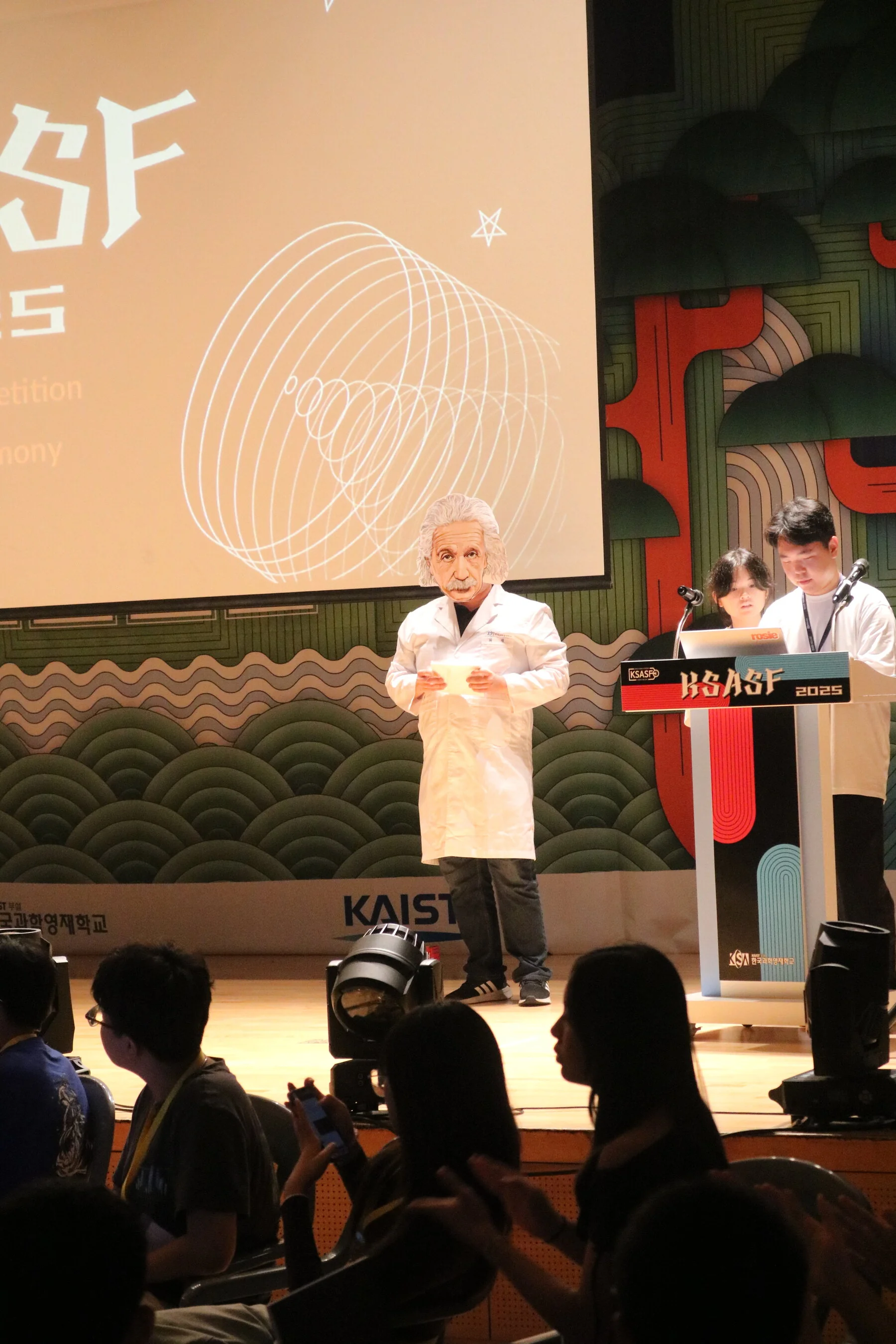
Ninety students from around the world spent a morning being the EHT collaboration: collecting fragments, arguing over reconstructions, and voting on the best one. Leading it, and standing up to host it, is the closest I've come to the thing I keep saying research is for: results matter more when other people can pick them up and use them.